‘Until you have built it, you’re not done’: How proven delivery experience de‑risks Canada’s nuclear plans
Episode Description
The nuclear power industry is experiencing a significant transformation as new reactor designs demonstrate the potential to overcome longstanding challenges of cost overruns and construction delays. Advanced reactor technology is reshaping how countries approach energy infrastructure, with implications for electricity generation, industrial development, and climate goals.
Modern reactor designs represent a fundamental shift from previous generations of nuclear plants. By incorporating passive safety systems that rely on natural phenomena rather than powered components, these facilities achieve greater simplification while maintaining enhanced safety standards. The streamlined approach reduces the physical footprint and material requirements of nuclear plants, addressing one of the industry’s most persistent obstacles: construction costs driven primarily by labor and commodity inputs.
The concept of learning curves has emerged as central to understanding nuclear project economics. Initial deployments of new reactor designs typically encounter significant challenges as teams work through incomplete engineering details and validate construction methods. However, subsequent units benefit dramatically from accumulated experience, with construction efficiency improving substantially between first and later projects. This pattern has been observed across international nuclear programs, where early struggles give way to increasingly smooth deployments.
Global deployment patterns reveal distinct regional trends in nuclear expansion. Growth is concentrated in areas experiencing rapid electrification, regions seeking energy security and diversification, and markets preparing for increased electricity demand from emerging technologies. The geopolitical dimension of nuclear development has become increasingly important, with countries weighing energy independence against traditional supplier relationships.

A notable evolution in nuclear project delivery involves the localization of supply chains. Rather than relying on centralized manufacturing in a single country, modern approaches emphasize developing regional capabilities to produce reactor components. This model allows countries to build domestic expertise while participating in global nuclear markets. Nations with existing nuclear infrastructure and manufacturing capabilities are particularly well-positioned to adapt to this approach.
The modularization of reactor construction represents another significant advancement. By shifting more work from construction sites to controlled factory environments, projects can achieve greater quality control and predictability. This factory-built approach resembles shipbuilding more than traditional construction, requiring expansion of specialized manufacturing facilities capable of producing large steel modules and components.
Operational performance of recently completed reactors has exceeded expectations, with new units achieving reliability levels that historically took decades to reach. The simplified designs contain fewer components that could potentially fail, reducing vulnerability points that might interrupt power generation. This early operational success suggests that design simplification benefits extend beyond construction into long-term plant performance.
Looking forward, the industry faces workforce challenges that may drive technological innovation in construction methods. The scarcity of skilled trades workers in developed economies is prompting exploration of advanced tools and digital systems to enhance productivity and make construction careers more attractive. Smart technologies, digital guidance systems, and enhanced coordination tools could transform how nuclear plants are built.
This summary was prepared by NewsBox AI. Please check against delivery.
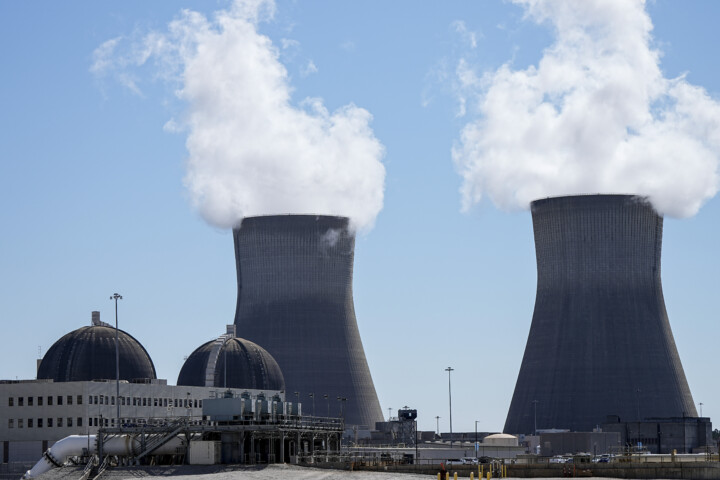
Luca Oriani, the president of APx Delivery at Westinghouse, discusses the AP1000 reactor, including how its simplified design helps reduce construction costs and timelines, as well as the key lessons the company has drawn from projects in Georgia and China. Oriani also explores the technology’s strong reliability record, Westinghouse’s approach to localization across different markets, and the particular advantages Canada brings to the table, given its mature nuclear supply chain and deep workforce expertise.