
‘This is not about a series of vandalism’: Canada’s antisemitism problem is only getting worse

Fault Lines examines the pressures pulling Canadian society apart and the principles that can hold it together. We look beyond headlines to understand how institutions, communities, and democratic norms are fraying. Our mission is to show how better choices can repair what is broken.
You can listen to this episode on Amazon, Apple, and Spotify.
Episode Description
Jesse Brown, editor and publisher of Canadaland, discusses his six-part investigative podcast series, “What Is Happening Here,” on antisemitism in Canada. He examines the surge in antisemitism since October 7th, from prevented mass murder plots to the systematic exclusion of Jews from Canadian institutions. He explores how anti-Zionist movements have mainstreamed hateful rhetoric, why progressive activists often dismiss Jewish concerns, and how media institutions have failed to adequately cover this crisis.
Episode Summary
Canada is experiencing a significant surge in antisemitism that extends far beyond isolated incidents of vandalism or hateful rhetoric at protests. The phenomenon represents a fundamental shift in how Jewish Canadians experience safety and inclusion within their communities, revealing deep institutional failures and social divisions that have emerged in recent years.
Security concerns have escalated dramatically, with multiple serious threats targeting Jewish communities across the country. Several planned mass casualty attacks have been thwarted at advanced stages, involving individuals who possessed weapons and explosives with clear intent to harm Jewish populations. These incidents have received limited public attention despite their severity, suggesting a disconnect between the scale of the threat and broader awareness.
Beyond physical security threats, Jewish Canadians are facing systematic exclusion from various institutions including workplaces, unions, and educational settings. When Jewish employees or students report experiencing antisemitism, they frequently encounter institutional frameworks that fail to recognize their complaints as legitimate discrimination. Diversity and inclusion policies in many organizations have been structured in ways that exclude Jewish concerns, leaving individuals without recourse through normal grievance procedures. This has led to a quiet exodus of Jewish professionals from public institutions across the country.
The media landscape has struggled to adequately cover these developments. Newsrooms have experienced their own internal conflicts over how to report on antisemitism, with some organizations losing significant portions of their Jewish staff. Editorial decisions have sometimes prioritized international events over domestic discrimination, framing Jewish concerns as emotional responses rather than legitimate safety issues. Data collection practices at major media organizations often exclude Jewish identity from diversity metrics, making it difficult to track representation and institutional changes.
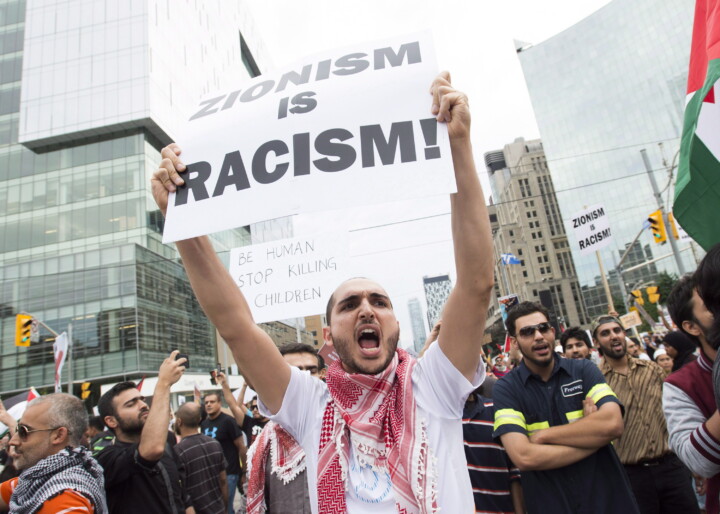
The protest movement that emerged following recent Middle Eastern conflicts has evolved beyond its initial focus. What began as demonstrations centered on foreign policy has transformed into a broader movement incorporating multiple causes and grievances. The rhetoric and imagery at these gatherings have increasingly included elements that Jewish communities find threatening, yet organizers maintain they cannot control all messaging at public events despite demonstrating the capacity to manage other aspects of their demonstrations.
Immigration patterns and integration approaches have contributed to the current climate. Canada’s changing demographics include populations from regions where antisemitic attitudes are more prevalent, while the national narrative around identity and belonging has shifted. Rather than emphasizing opportunity and integration, newer frameworks emphasize historical injustices and systemic oppression, potentially creating conditions for disaffection among recent arrivals who face economic challenges and limited social support.
The distinction between criticism of foreign governments and prejudice against domestic populations has become increasingly blurred. Opposition to particular political movements has merged with hostility toward the ethnic groups most associated with those movements, creating an environment where individuals face professional and social consequences based on perceived political affiliations rather than their actual views or actions.
This summary was prepared by NewsBox AI. Please check against delivery.

Comments (0)