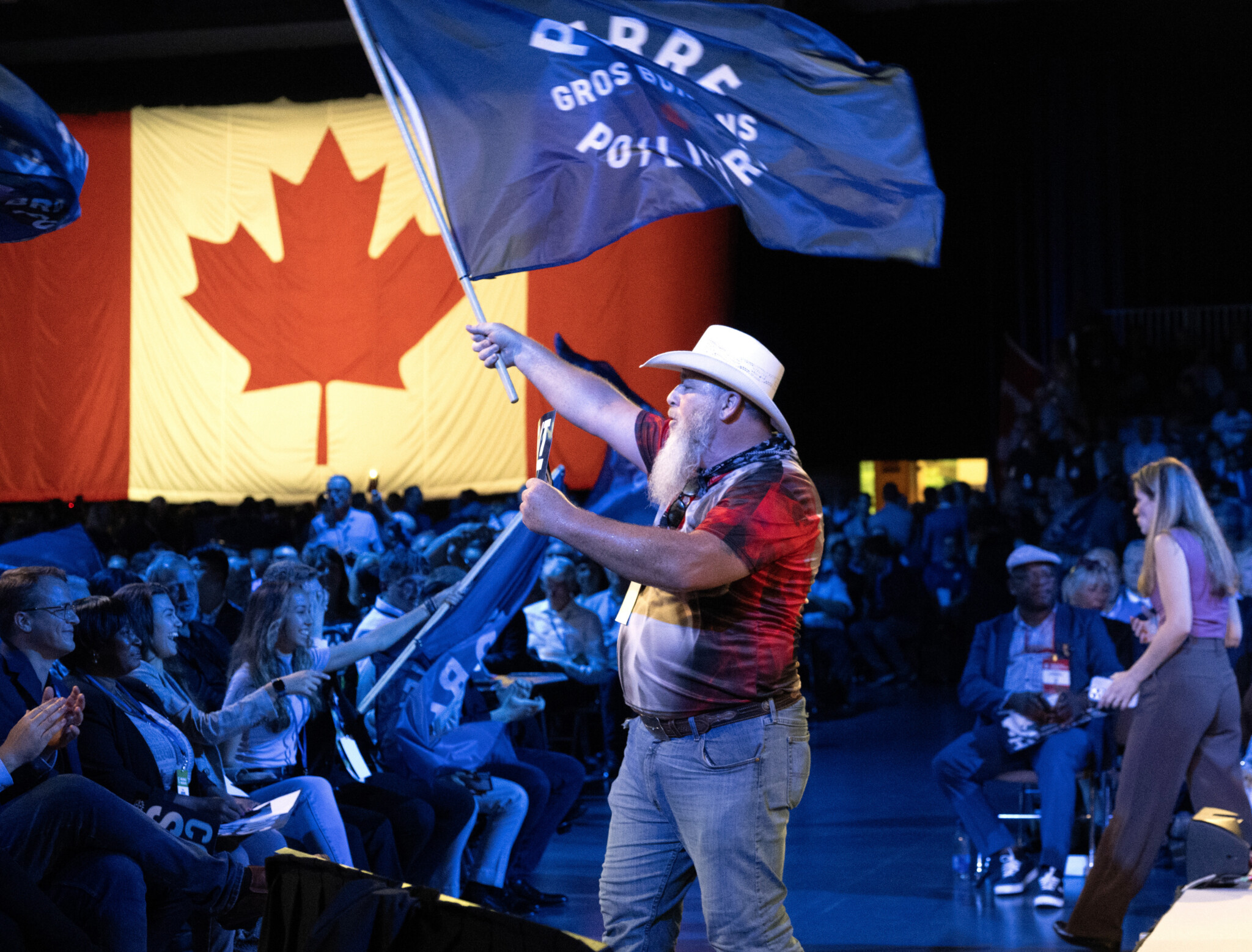
The Conservative Party of Canada’s convention in Calgary this Thursday to Saturday is much more than just members voting on the future leadership of Pierre Poilievre. It’s also about deciding what the party will stand for in an election that could come as early as this spring.
The Conservative’s national policy convention, the first in three years, involves members debating and voting on policy proposals on a range of topics critically important to Canadians and the country.
Conservative members will debate and vote on policy propositions on health care, criminal justice, economic development, agriculture, diversity, government accountability, democratic reform, federalism, environment, heritage and culture, immigration, foreign affairs, and national defence.
Even if the Conservatives don’t have a chance to take power in the short term, Prime Minister Mark Carney and the Liberals have shown their willingness to borrow policy ideas from the Conservatives. That means the Conservatives’ agenda could still influence the direction of the country.
Out of a total of 62, here are the top 9 compelling policy submissions being voted on at the Conservative convention and why they could be critical federal policy planks in helping Canada recover from the country’s current struggles.
1. A Trans-Canadian Transportation, Telecommunication, and Energy Corridor
Policy proposal: “We support establishing a Trans-Canadian Transportation, Telecommunication, and Energy Corridor (TTEC)…extending from the Pacific ports of Vancouver and Prince Rupert to the Atlantic port of St. John’s, Newfoundland and Labrador.”
Why it matters: Canada has faced major challenges when it comes to building major infrastructure projects, which now often take over a decade to complete, such as the Trans Mountain Pipeline expansion which took 12 years.
Indigenous, provincial and federal consultation requirements, and myriad regulations have hindered the development of roads, rail, pipelines, transmission lines, and telecommunications infrastructure vital to the efficient transportation of energy, information, people, and information.
The Conservative’s TTEC proposal aims to help streamline these types of infrastructure projects, and in turn, attract more private investment, due to the reliability in getting projects to completion. Poilievre previously said during the last election he wanted a “pre-approved transport corridor entirely within Canada.”

2. Critical minerals development and mining infrastructure
Policy proposal: “A Conservative government will partner with provinces, territories, Indigenous peoples and communities to build critical mining infrastructure. We will support mineral exploration, implement competitive tax incentives for mining investment, fast-track permits by removing bureaucracy and streamline processes to unlock economic opportunities for Canadian communities.”
Why it matters: Canada possesses vast deposits of critical minerals essential for modern technology, electric vehicles, and renewable energy systems, yet regulatory complexity prevents timely development. Mining projects in Canada currently take an average of 27 years to move from discovery to production, one of the worst rankings in the world. This development proposal aims to assist in expediting mining projects that then could provide thousands of jobs and unlock billions in untapped wealth.
3. A dollar-for-dollar fiscal discipline law
Policy proposal: “A Conservative government will legislate a ‘Dollar-for-Dollar’ law requiring the federal government, during non-emergency designated times, to identify equivalent savings for any new spending, ensuring fiscal discipline and balanced budgets without raising taxes.”
Why it matters: Carney’s first budget projects interest payments on the debt will soon surpass federal funds for health care and child care combined. Not only that, but Ottawa has now swapped reducing the debt-to-GDP ratio for deficit-to-GDP ratio, while interest payments on the national debt are set to hit $76.1 billion by 2029.
The dollar-for-dollar fiscal discipline law would hold Ottawa more fiscally accountable and rein in out-of-control spending.
4. Energy sovereignty and pipeline infrastructure
Policy proposal: “The Conservative Party believes our energy sovereignty relies on responsibly developing and exporting our natural resources. A Conservative government will repeal the Oil Tanker Moratorium and Impact Assessment acts, to be replaced with a single, efficient, national regulatory process to handle environmental review and indigenous consultation of major resource projects.”
Why it matters: Canada produces world-class energy resources but lacks sufficient pipeline capacity to transport them to international markets, forcing dependence on a single customer and landlocking resources that could generate substantial national wealth. Canada has the world’s third-largest proven oil reserves at 168 billion barrels, yet still exports nearly 90 percent of its oil to only the U.S., receiving discounted prices estimated at US$10-$20 per barrel below world market prices.
In 2019, the Trudeau government passed two pieces of legislation, the Impact Assessment Act and Oil Tanker Moratorium Act, that both severely hampered Canada’s ability to approve new oil pipelines. The oil tanker moratorium restricts large oil tankers from stopping or loading along much of B.C.’s northern coast, preventing a large-scale terminal to be built that could ship large volumes of oil to Asian markets. Meanwhile, the assessment act added a federal review process for new projects which critics say has severely reduced investment interest in new projects.

5. Striking down compelled speech (the Jordan Peterson policy)
Policy proposal: “The Conservative Party recognizes freedom of speech is a hallmark of a free society. Compelled speech in any form is a violation of the Charter of Rights and Freedoms. Individual freedoms of thought, belief, opinion, and expression supersede all compelled speech. We believe that no person should have their professional accreditation revoked solely for voicing their opinion or refusing compelled speech.”
Why it matters: Canadians have increasingly seen a slow but steady ideological creep enter professional bodies and infringe on their right to freedom of expression.
World-famous clinical psychologist and former University of Toronto professor Jordan Peterson is the most high-profile case. In 2022, the College of Psychologists of Ontario responded to complaints about Peterson’s public social media posts and ordered him to attend a remedial training program. The complaints centered around calling a plus-sized Sports Illustrated model “not beautiful”, criticizing Elliot Page’s gender transition surgery, and insulting former Prime Minister Trudeau’s principal secretary Gerald Butts. He refused to comply. The decision made its way through the courts, but the demand for remedial training stands.
Peterson first rose to prominence when he protested and opposed 2016 legislation that added “gender identity” and “gender expression” to the Canadian Human Rights Act.
Today, many professional bodies, like law societies, are directing professionals to adopt “inclusive language” as part of official professional conduct.
6. Immigration system reform for national security and economic alignment
Policy proposal: “Canada will restore integrity, security, and fairness to immigration through legislative reforms to restore IRPA’s [Immigration and Refugee Protection Act] protective framework, comprehensive screening and border security reform, and an asylum system overhaul that upholds compassion while deterring abuse. These measures will align immigration with Canada’s values, capacity and need.”
Why it matters: Canada’s immigration system suffers from serious deficiencies undermining both security and public confidence. Processing backlogs involving more than a million applications as of late 2025 has meant skyrocketing wait times of up to hundreds of months for many new applicants. Meanwhile, the asylum system faces widespread abuse with acceptance rates only at 63 percent in the past five years, indicating many claims lack merit.
Between 2015 and 2025, Canada’s population grew by over 6 million people—the fastest growth rate in the G7—yet housing starts have not kept pace, contributing to a housing crisis.
This policy aims to restore integrity through legislative reforms strengthening IRPA’s protective framework with enhanced security screening, comprehensive border security improvements with proper assessment at designated ports, safe accommodation during processing, and flexible annual regional limits based on actual employment opportunities, housing availability, and healthcare capacity.
7. Protection from political de-banking
Policy proposal: “The Conservative Party believes that no Canadian should be deprived of essential financial services based on personal beliefs or lawful activities. A Conservative Government will enact legislation to safeguard Canadians from arbitrary de-banking practices, fostering a fair financial services system that respects Canadian’s freedoms while maintaining institutional stability.”
Why it matters: During the 2022 Freedom Convoy protests, the federal government invoked the Emergencies Act and directed financial institutions to freeze approximately 219 bank and 253 Bitcoin addresses tied to protestors without court orders or due process.
A recent ruling by the Federal Court of Appeal found government debanking citizens to be illegal.
In an increasingly cashless economy where 86 percent of transactions are now electronic, exclusion from the financial system for exercising Charter rights threaten Canadians’ rights to free expression and lawful protest.
8. Addiction treatment and recovery
Policy proposal: “The Conservative Party supports drug prevention and substance abuse programs to provide persons with addictions long-term mental and physical health care and supportive social services to address their underlying problems, such as, mental illness, family instability, trauma, poverty or homelessness. We oppose the decriminalization of illicit drugs and oppose taxpayer-funded hard drug safe supply programs. We believe in hope and healing. We support treatment, recovery and rehabilitation for those suffering from addiction.”
Why it matters: Canada faces a devastating drug crisis with overdose deaths reaching record levels, particularly from fentanyl and other synthetic opioids. There were 6,161 opioid-related deaths in Canada from the middle of 2024 to June 2025, averaging 17 deaths per day.
B.C., which implemented decriminalization and expanded safe supply programs, saw overdose deaths increase rather than decrease, with 2,589 deaths in 2023.
British Columbia’s NDP government announced at the start of this year that they were ending their decriminalization program this month. The program allowed adults to possess up to 2.5 grams of heroin, fentanyl, cocaine or methamphetamine without being arrested, charged or having their drugs seized.
“The pilot hasn’t delivered the results that we hoped for,” said B.C. Health Minister Josie Osborne.
9. Bail reform that prioritizes public safety
Policy proposal: “…A Conservative government would strengthen the Criminal Code to prioritize public safety and security as reasonable grounds for denying bail or imposing stricter bail conditions for any accused judged likely to reoffend if released.”
Why it matters: Canada’s bail system has become dangerously permissive after the last previous Liberal government passed legislation that asked judges to use the “principle of restraint,” with repeat offenders committing serious crimes while on bail, creating an environment that current Justice Minister Sean Fraser said has allowed some repeat offenders to abuse by “coming in and out of the justice system.” In Ontario alone, incidents of court order breaches alongside violent crime rose 29 per cent between 2017 to 2021.
Last October, the Carney government introduced bail reforms that “reverse onuses”, which makes detention the default, for certain violent or organized crime-related charges.
However, critics of the new bail legislation believe these reforms do not go far enough. The Carney government isn’t repealing the previous legislation that called for judges to err on the side of leniency when offering bail.

Graeme Gordon is The Hub's Senior Editor and Podcast Producer. He has worked as a journalist contributing to a variety of publications, including CBC,…
The Conservative Party of Canada’s national policy convention in Calgary is a significant event where members will debate and vote on policy proposals across various critical areas, including healthcare, criminal justice, and economic development. Out of 62 submissions, 9 compelling proposals are highlighted as potentially shaping Canada’s comeback. Even if the party doesn’t immediately form government, their agenda could influence the current Liberal government’s policy direction, making these proposals potentially crucial for the country’s future.
How might Conservative policy proposals influence Canada's direction, even if they don't win the next election?
What key areas are the Conservatives focusing on for Canada's 'comeback' according to their policy proposals?
Beyond leadership, what is the primary purpose of the Conservative Party of Canada's convention?







Comments (9)
Nothing about altering the Investment Act to making foreign investment easier. Nothing about opening up sectors like banking, telecom, airlines, the list goes on to more competition. Ending the Laurentian capitalist stranglehold – stop subsidizing regional or other favourites. Most of this is really weak tea and we have more fundamental economic problems than this.