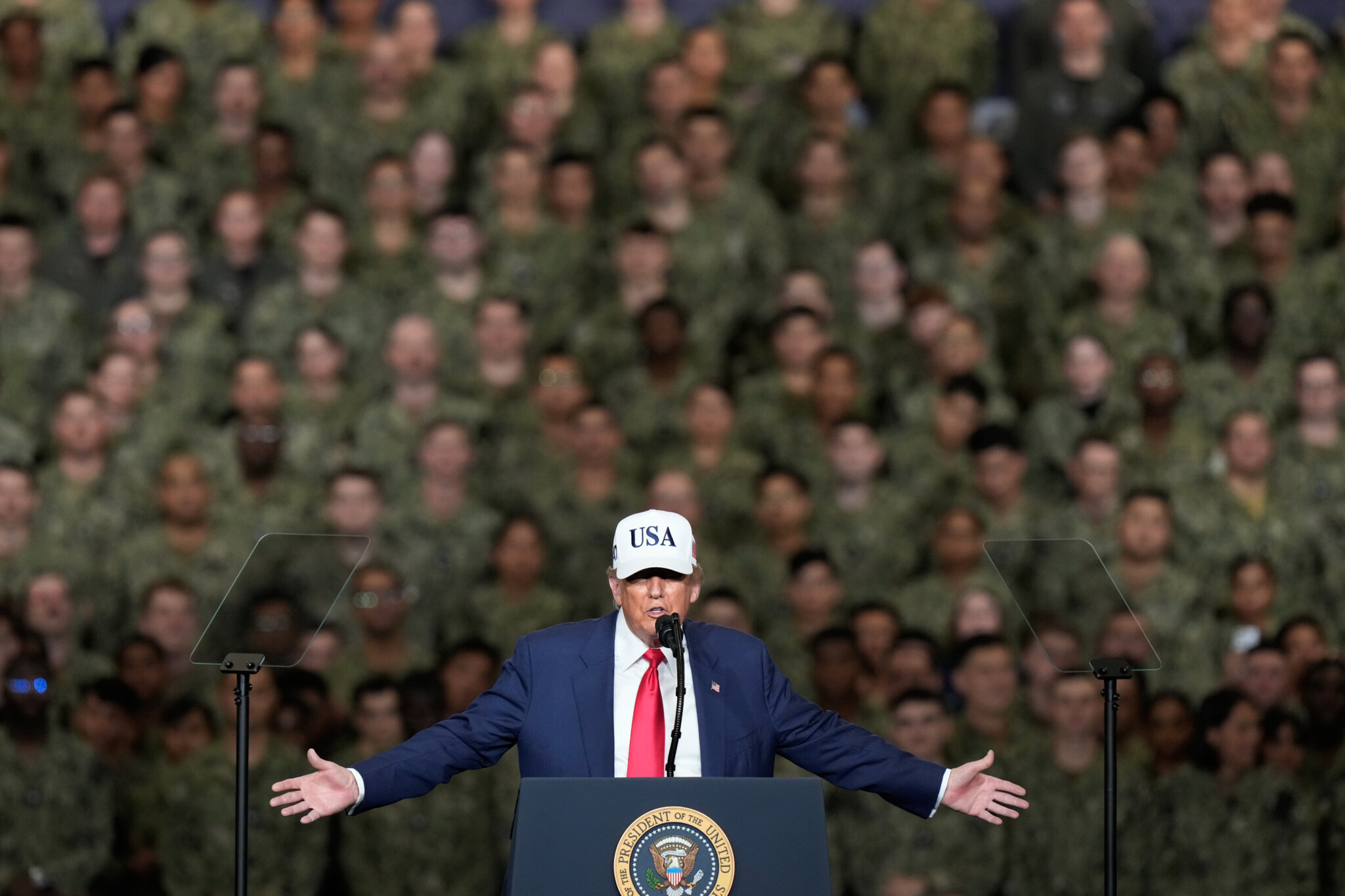
‘A declaration of hemispheric dominance’: Is Trump’s new security doctrine good news or bad news for Canada?
Janice Gross Stein, Belzberg professor of Conflict Management and the founding director of the Munk School of Global Affairs & Public Policy at the University of Toronto, discusses the Trump administration’s new national security doctrine and its implications for Canada.
She examines how this strategy asserts U.S. hemispheric dominance and challenges Canadian Arctic sovereignty. She argues the doctrine signals a return to 19th-century spheres of influence, where three major powers—in this case, the United States, China, and Russia—dominate their respective regions while smaller nations follow their rules.
You can listen to this episode on Amazon, Apple, and Spotify.

Program Summary
This is an automated summary. Please check against delivery.
The Trump administration’s latest national security strategy document has sparked significant debate about the future of international relations in the Western Hemisphere, marking what some observers view as a fundamental shift in American foreign policy doctrine.
The document represents a departure from traditional national security strategies in both tone and content. Unlike previous versions that typically emerged from extensive bureaucratic deliberation and measured language, this iteration presents a more direct and assertive vision of American interests in the hemisphere. The strategy has generated particular concern in Europe, where diplomatic circles are reassessing long-standing transatlantic relationships.
At the heart of the document lies a reimagining of hemispheric dominance that draws historical parallels to nineteenth-century American foreign policy. The approach echoes the Monroe Doctrine of 1823, which warned European imperial powers against interference in Latin American affairs, and the Roosevelt Corollary of 1904, which reinforced American primacy as Latin American nations gained independence. The current strategy extends these historical precedents with language that encompasses the entire Western Hemisphere, including North America.
A particularly notable aspect of the document involves restrictions on foreign assets within the hemisphere. This provision raises complex questions about international partnerships and economic relationships that have developed over decades. The implications extend to defense cooperation agreements, technology sharing arrangements, and joint production ventures that currently exist between Western allies.
The strategy also addresses maritime access issues, particularly regarding Arctic waterways. Long-standing disagreements over the legal status of certain northern passages have traditionally been managed through diplomatic accommodation between neighboring nations. The new document takes a more assertive stance on these matters, treating them as questions of international access rather than subjects for bilateral negotiation.
Analysts suggest the document reflects a broader worldview that divides global influence into distinct spheres dominated by major powers. Under this framework, the United States would exercise primary authority over the Western Hemisphere, while other major powers would maintain similar dominance in their respective regions. This represents a significant departure from the post-World War II international order, which emphasized multilateral institutions and rules-based frameworks for managing international relations.
The implications for middle-power nations are substantial. Countries that have traditionally relied on international law and multilateral agreements to protect their interests may find themselves navigating a more transactional environment where bilateral relationships with dominant regional powers become paramount. The shift suggests a move away from universal principles toward arrangements based on proximity and power dynamics.
European governments have responded with concern to the strategy’s implications for transatlantic cooperation. The document’s language regarding hemispheric exclusivity raises questions about the future of security partnerships and economic relationships that have formed the foundation of Western alliance structures since the mid-twentieth century.
Does Trump's 'hemispheric dominance' doctrine echo historical US policy, and how might it impact Canada's sovereignty?
How could restrictions on foreign assets under this new doctrine affect existing international partnerships and economic ties?
If major powers dominate their regions, what does this mean for middle-power nations like Canada in the post-WWII international order?


Comments (0)