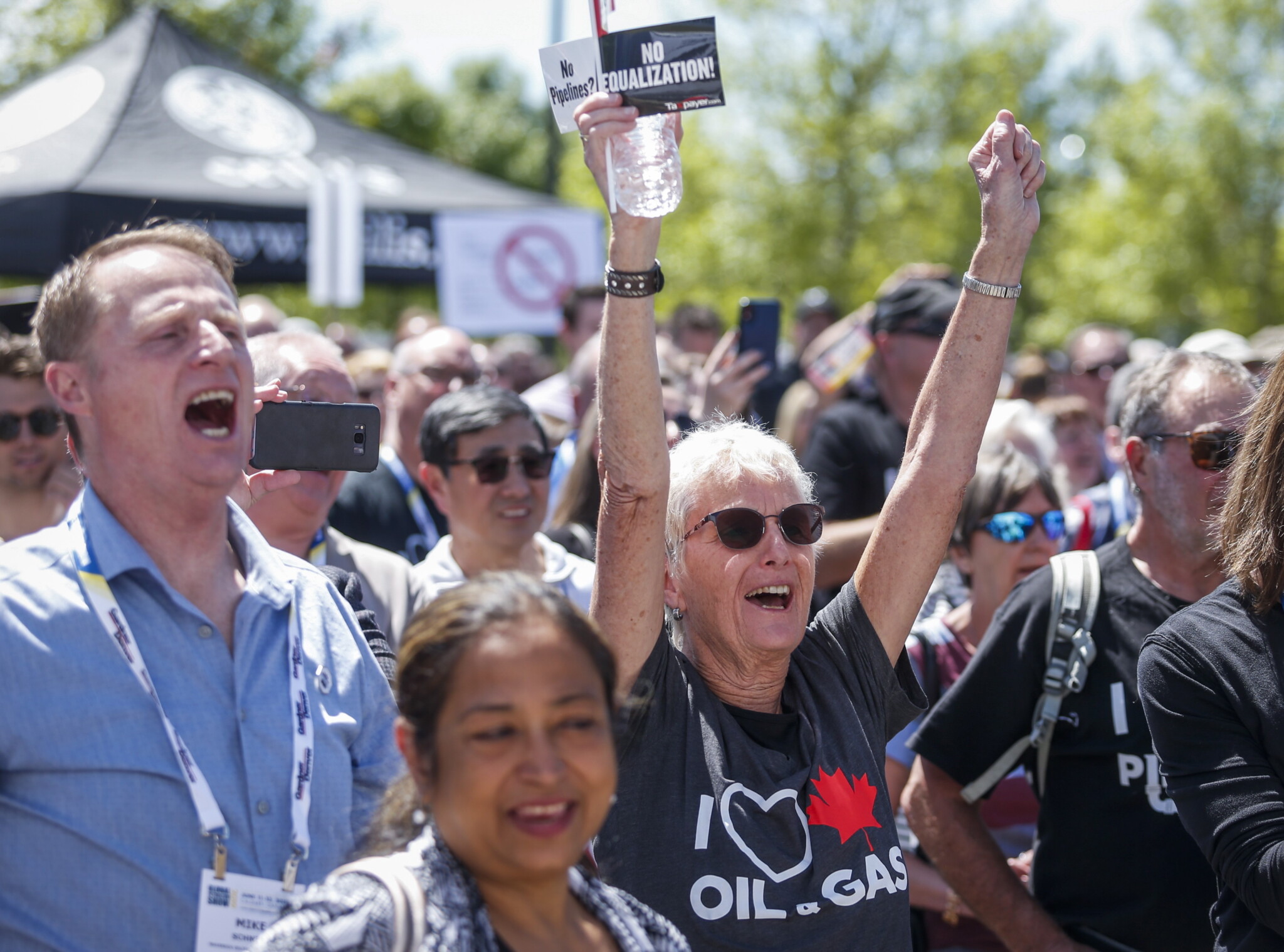
‘They’re tired of the bickering’: The Roundtable on why Canada’s ‘moderate middle’ supports the Carney-Smith pipeline deal
Rudyard Griffiths and Sean Speer discuss Prime Minister Mark Carney’s political momentum following his pipeline agreement with Alberta Premier Danielle Smith. They explore whether a “silent majority” exists beyond polarized political extremes and how Carney’s centrist positioning has created some challenges for Pierre Poilievre and the Conservatives.
In the back half of the show, they are joined by The Hub’s contributor Stephen Staley, to discuss protests against this week’s Munk Debate on Israel’s two-state solution. They reflect how these events demonstrate a broader threat against free speech and other liberal principles in Canada.
You can listen to free versions of this episode on Amazon, Apple, and Spotify.
If you liked what you heard in the first half of the program and wish to subscribe to full-length editions of The Roundtable, please consider becoming a Hub Hero. Hub Heroes also get access to all our paid content on TheHub.ca. All these benefits are conferred for one year. Sign up now!

Program Summary
This is an automated summary. Please check against delivery.
Recent political developments in Canada suggest a potential recalibration of the country’s political landscape, with evidence emerging that the moderate middle ground may hold more electoral promise than previously assumed. The phenomenon has become particularly apparent following recent policy announcements that have garnered unexpectedly broad support across traditional partisan divides.
The political environment appears to be challenging long-held assumptions about polarization in Canadian politics. While algorithmic social media feeds and activist voices on both extremes have dominated public discourse, there are indications that a silent majority of Canadians may be seeking pragmatic, centrist solutions rather than ideologically driven policies. This disconnect between the loudest voices and broader public sentiment has created opportunities for political leaders willing to stake out middle ground positions.
The dynamics have created particular challenges for opposition parties that had built their positioning around clear policy differentiations. As the governing party moves to occupy centrist territory on issues ranging from taxation to energy policy, traditional sources of political contrast have begun to diminish. This strategic repositioning has effectively neutralized several key issues that previously advantaged opposition forces.
The trend raises questions about whether Canada’s political financing system may inadvertently contribute to perceived polarization. The requirement for parties to raise funds through small individual donations creates incentives to galvanize base supporters through manufactured differentiation and divisive messaging. This dynamic may have obscured the extent to which broad consensus exists on many policy questions among ordinary Canadians who are less ideologically committed.
Historical precedents suggest that politicians who successfully appeal to pragmatic voters over activist voices can build durable support. Past governments that pursued sensible policy reforms often enjoyed backing from a silent majority that was not reflected in media coverage or organized opposition. The current moment may represent a similar opportunity for leaders willing to govern for the median voter rather than the most vocal constituencies.
The situation has prompted reflection on how many policy areas might benefit from this centrist approach. Issues traditionally considered politically untouchable may actually enjoy broader public support than conventional wisdom suggests. Health care reform, energy development, and other contentious topics might find more receptive audiences if presented as practical solutions rather than ideological positions.
For opposition parties, the challenge lies in finding new sources of differentiation that resonate with voters while remaining true to core principles. The risk of appearing too extreme or too reactive to fringe voices could alienate the moderate voters who ultimately decide elections. Successfully navigating this terrain requires balancing authentic conservative or progressive values with pragmatic policy positions that appeal beyond the base.
The developments also highlight the role of strategic political partnerships in reshaping narratives. Collaboration across traditional divides can signal to voters that practical problem-solving takes precedence over partisan positioning. Such alliances, while potentially creating tensions with base supporters, may ultimately prove politically advantageous if they demonstrate responsiveness to broader public preferences.


Comments (1)
I would be curious to hear from the Hub how the ‘silent middle vs polarization’ thesis will play into the debate between the postliberal/new right and the old/liberal right that has been going on.
Part of the case made by the new right is that either polarization is here to stay and/or that it is a good thing to nurture by the right. Some Tory MPs are leaning into that smaller space of differentiation and combative tone, focusing on affective messaging and social media.